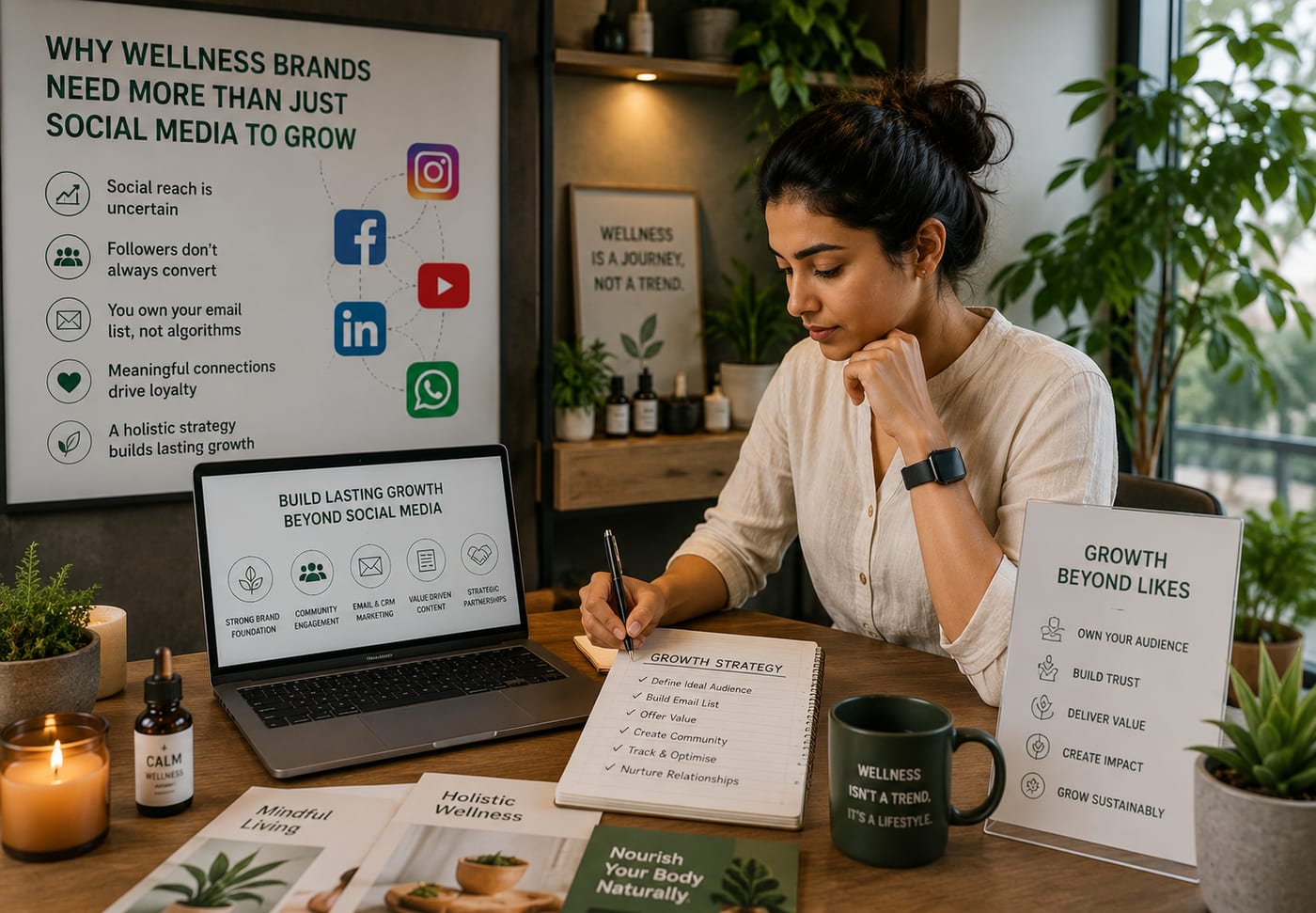
For many wellness brands, social media often feels like the primary path to growth. It offers visibility, allows direct communication with audiences, and creates opportunities to share content regularly. As a result, many businesses focus most of their efforts on building a presence across platforms, expecting it to translate into consistent growth.
However, over time, it becomes clear that relying only on social media does not always lead to sustainable results. While engagement may increase, it does not always convert into meaningful inquiries or long-term relationships. This is where the limitation of social media marketing for wellness brands becomes evident — visibility alone does not guarantee growth.
The Limitations of Social Media Visibility
Social media can help wellness brands reach a large audience, but this visibility is often temporary and dependent on algorithms. Content that performs well one week may not reach the same audience the next, which creates inconsistency.
This inconsistency affects how social media marketing for wellness brands contributes to growth. While it can generate attention, it does not always ensure that the right audience sees the content at the right time. A more stable approach requires building visibility beyond social platforms so that potential customers can discover the brand through multiple channels.
Lack of Long-Term Discoverability
Unlike search platforms, social media content does not always remain discoverable over time. Posts tend to lose visibility quickly, which limits their long-term impact. This is one of the key challenges in social media marketing for wellness brands, as continuous posting is required just to maintain presence.
Without additional channels, the effort needed to stay visible increases significantly. In contrast, a broader wellness marketing strategy that includes search visibility and content platforms helps create long-term discoverability and reduces dependency on constant posting.
Limited Control Over Audience Reach
Another important factor to consider is the level of control over audience reach. Social media platforms determine how content is distributed, which means that even well-created content may not reach the intended audience.
This limitation affects the effectiveness of social media marketing for wellness brands, as growth becomes dependent on external factors. Changes in algorithms or platform policies can directly impact visibility and engagement. By diversifying efforts through wellness digital marketing, brands can reduce this dependency and create a more stable growth system.
The Need for Strong Brand Positioning
Wellness brands are built on trust, connection, and clarity. While social media can support these elements, it is not always enough to communicate the full depth of a brand's value. A clear brand identity requires consistent messaging across multiple touchpoints.
This includes websites, content platforms, and search presence. Without this consistency, it becomes difficult to build recognition and credibility. A structured approach to wellness marketing strategy ensures that positioning remains clear and aligned across all channels, which strengthens overall perception.
Importance of Owned Platforms
One of the key limitations of relying only on social media is the lack of ownership. Social platforms are controlled environments, which means that brands do not have full control over their audience or data.
Owned platforms such as websites and content hubs provide more control and stability. They allow brands to present information in a structured way and create a consistent experience for users. As part of wellness digital marketing, building and maintaining owned platforms supports long-term growth and reduces reliance on external platforms.
Converting Attention into Action
Generating attention is only one part of the growth process. Converting that attention into meaningful action requires a clear path for users to follow. Social media often focuses on engagement, but without a structured system, it may not lead to inquiries or conversions.
Understanding how to grow a wellness brand beyond social media involves creating a journey that guides users from discovery to action. This includes clear communication, strong calls to action, and an optimized user experience.
Building a Balanced Growth System
A sustainable growth system combines multiple elements rather than relying on a single channel. This includes search visibility, content, user experience, and consistent communication. When these elements work together, they support a more stable and predictable growth pattern.
Social media continues to play a role, but it becomes part of a larger system rather than the sole focus. A well-defined wellness marketing strategy helps integrate these elements and ensures that efforts are aligned toward long-term goals.
Moving Toward a More Structured Approach
For wellness brands looking to grow consistently, it becomes important to move from a platform-dependent approach to a system-driven approach. This shift allows businesses to build a stronger foundation and reduce uncertainty.
Social media marketing for wellness brands can still contribute to visibility and engagement, but it works best when supported by other channels. Klempz works with wellness businesses to develop structured systems that improve visibility, strengthen positioning, and support long-term growth. Learn more about our digital marketing approach for wellness brands.
Conclusion
Social media plays an important role in building awareness, but it is not enough on its own to support consistent growth. Wellness brands require a broader approach that combines visibility, trust, and structured communication.
By expanding beyond social media and focusing on a balanced strategy, brands can create a more reliable and sustainable growth system. Over time, this approach leads to stronger engagement, better conversions, and deeper audience connections.